Deck Builder in Central New Jersey
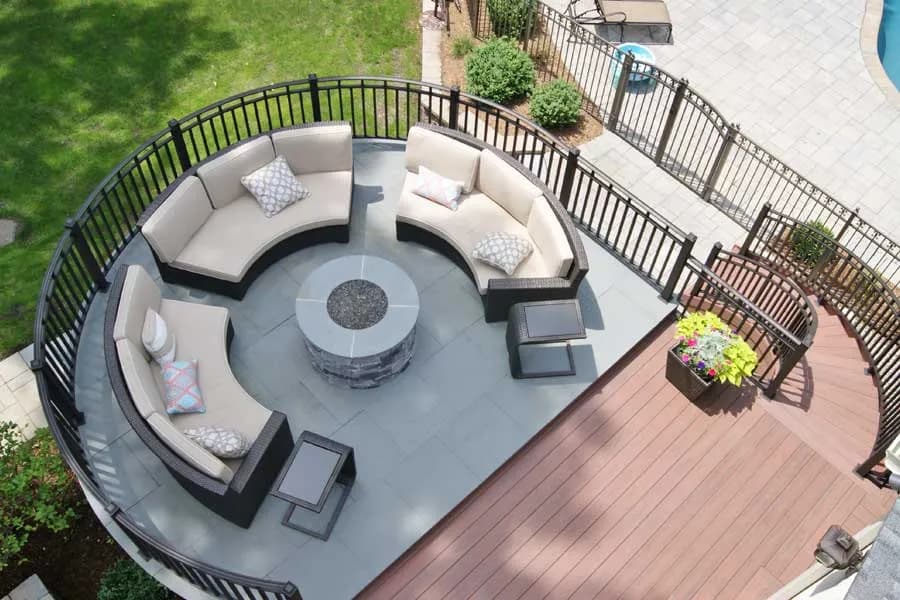
MG Builders LLC designs and builds custom decks for homeowners across Central New Jersey — wood and composite decks of all sizes, from simple backyard platforms to multi-level entertainment spaces with built-in seating, pergolas, and lighting. Licensed, insured, and backed by 29+ years of experience.
A well-built deck extends your living space outdoors and adds real value to your home. Whether you want a simple platform for grilling, a multi-level deck for entertaining, or a complete outdoor living area with a pergola and built-in features, MG Builders delivers quality deck construction across Central New Jersey — design, permitting, construction, and finishing, all under one roof.
What We Offer
Pressure-treated wood deck construction
Composite and PVC decking (leading composite and PVC brands)
Multi-level and wraparound deck designs
Pergola and shade structure construction
Built-in seating, planters, and storage
Deck railing systems — wood, composite, cable, and glass
Outdoor lighting integration
Deck staining and waterproofing
Deck repair and board replacement
Full permit management and inspections
Our Process
Free Consultation
Your property is visited, vision is discussed, the site is assessed, and a detailed estimate is provided.
Design & Permits
A deck plan is created that meets your needs and complies with local codes, and all required permits are pulled.
Foundation
Footings are dug and poured to proper depth for NJ frost line requirements.
Framing & Decking
Structure is framed with pressure-treated lumber and decking material is installed.
Railings & Finishing
Railing systems, stairs, lighting, and any custom features are completed.
Final Inspection
Municipal inspection passed, final walkthrough, and 12-month warranty handover.
Why Choose MG Builders
A deck that isn't built on proper footings or with code-compliant railings is a safety hazard and a failed inspection waiting to happen. Decks must be built to NJ code every time — proper footing depth for frost lines, structural-grade lumber, and compliant railing heights. With 29 years in Central New Jersey, MG Builders understands what it takes to build a deck that lasts.
Deck Materials: Wood vs. Composite in New Jersey
Choosing the right decking material is one of the most important decisions in your deck project, and the right answer depends on your budget, your appetite for maintenance, and how you plan to use the space. Here's an honest comparison of your options so you can make the right choice.
Pressure-treated lumber is the most common and affordable wood option. It's treated with preservatives that resist rot, decay, and insects — essential in NJ's humid climate. A pressure-treated deck typically costs less upfront, but it requires sanding, staining or sealing every 1-2 years to prevent cracking, warping, and splintering. Without regular maintenance, pressure-treated wood deteriorates and typically lasts 10-15 years before boards need replacement. It's a solid choice for homeowners on a tight budget who are committed to the maintenance schedule.
Cedar is a premium wood option with natural oils that resist moisture and insects. It looks beautiful, accepts stain evenly, and is less prone to warping than pressure-treated pine. Cedar costs more upfront and still requires periodic sealing, but it's a step up in aesthetics and dimensional stability.
Composite decking — products like leading composite brands — uses a combination of wood fiber and PVC or polyethylene. The main advantages are durability and low maintenance: composite decking doesn't rot, splinter, or require staining. Most composite products carry warranties of 25-30 years, and high-end PVC boards carry long-term fade and stain warranties. In NJ's humid summers and freeze-thaw winters, composite consistently outperforms wood over a 20-year horizon. The tradeoff is higher upfront cost — composite typically runs 2-3x the material cost of pressure-treated lumber.
The math often favors composite when you factor in lifetime maintenance costs. Staining a pressure-treated deck every 2 years over 25 years adds up — composite pays for itself over the long term for most homeowners. Visit the Edison showroom to compare colors, textures, and options from multiple manufacturers before committing.
NJ Deck Permits and Building Codes
In New Jersey, virtually every new deck requires a building permit — and for good reason. Decks are structural additions to your home that bear significant live and dead loads. An unpermitted deck that fails can result in serious injury, and it will surface as a problem when you try to sell your home.
A building permit is required for any new deck, deck addition, or significant structural modification in NJ. The permit process involves submitting a plan that shows footing locations and dimensions, beam and joist sizing, ledger board attachment method, and railing design. Most municipalities across Central New Jersey require a licensed contractor to pull the permit, though homeowners can apply in some townships.
Footing depth is a critical code requirement that varies by municipality. NJ's frost line depth ranges from 36 to 42 inches in most of Central NJ — footings must extend below this depth to prevent frost heave. Concrete footings must extend below frost line depth and are verified by the municipal inspector before framing begins.
Railing requirements in NJ are governed by the International Residential Code as adopted by the state. Decks 30 inches or more above grade require guardrails at minimum 36 inches high (42 inches for commercial applications). Balusters must be spaced so a 4-inch sphere cannot pass through. All posts, railings, and connectors must be rated for exterior use and meet load requirements of 200 pounds at any point.
Ledger board attachment — where the deck connects to your house — is one of the most inspected details. NJ code requires specific lag bolt patterns, flashing, and joist hanger specifications to prevent ledger failure, which is the most common cause of deck collapses.
Setback requirements vary by municipality. Most NJ towns require decks to maintain 5-10 feet from side property lines and 20-30 feet from rear property lines, though variances are available in some cases. Setback requirements should be reviewed for the specific property before design begins, so there are no surprises. All permit applications, inspection scheduling, and code compliance details should be handled by a licensed contractor.
Frequently Asked Questions
How much does a deck cost in New Jersey?
Deck costs in NJ depend on material, size, and design complexity. Options range from pressure-treated wood to low-maintenance composite decking. Every project is unique — call (732) 636-3000 for a free estimate.
Wood or composite — which is better?
Wood is less expensive upfront but requires annual staining and maintenance. Composite costs more initially but is virtually maintenance-free, won't splinter, and lasts 25-50 years. The right choice depends on your budget and lifestyle.
Do I need a permit to build a deck in NJ?
Yes — most deck construction in New Jersey requires a building permit. All permit applications and inspections should be handled by a licensed contractor as part of every deck project.
How long does it take to build a deck?
Most residential decks take 1-3 weeks from start to finish, depending on size and complexity. Permitting can add 2-4 weeks before construction begins.
What deck materials work best in New Jersey weather?
Composite decking (Trex, TimberTech, AZEK) handles NJ's freeze-thaw cycles, humidity, and salt air better than wood — it won't rot, splinter, or warp. Pressure-treated pine is the budget option but requires annual sealing and lasts 15-20 years versus 25-50 for composite. Cedar and tropical hardwoods (ipe, mahogany) are premium options with great looks but require maintenance.
Do you build elevated decks for sloped properties?
Yes. Elevated decks on sloped lots require deeper concrete footings (typically 4-6 feet below frost line per NJ code), engineered support posts, and proper railing systems. Many homes in Holmdel, Middletown, and the Watchung Hills require elevated construction due to terrain. Engineering review is included for any deck more than 30 inches above grade.
What features can be added to a deck?
Common deck add-ons include built-in seating, planter boxes, multi-level platforms, pergolas and shade structures, low-voltage lighting, hot tub framing, gas line stub-outs for grills, and screened porches. Each feature is engineered to match deck construction and pulled into the same permit. Costs are itemized so you can decide which features to include.
What warranty does MG Builders offer on deck construction?
Every deck includes a 12-month workmanship warranty covering framing, fasteners, and installation defects. Manufacturer warranties on composite decking (typically 25-50 years) and railing systems pass through to the homeowner. If a board shifts due to fastener failure or structural issue, MG Builders comes back and corrects it at no charge.
Decks Across Central New Jersey
We provide decks services throughout Central New Jersey. Click your area to learn more.
Ready to Start Your Decks Project?
Call today for a free estimate or visit our showroom at 130 Plainfield Ave, Edison, NJ.